What is Electrolyte Imbalance?
Electrolytes are essential minerals such as sodium, potassium, calcium, and magnesium that play a vital role in maintaining fluid balance, nerve function, muscle movement, and heart rhythm. An electrolyte imbalance occurs when these levels become too high or too low, potentially leading to serious health complications if not treated promptly.

Common Electrolyte Imbalances We Treat
- Hyponatremia / Hypernatremia (Low or High Sodium): Imbalance of sodium levels that can affect fluid balance, brain function, and blood pressure, often causing confusion, weakness, or seizures.
- Hypokalemia / Hyperkalemia (Low or High Potassium): Abnormal potassium levels that may lead to muscle weakness, fatigue, and serious heart rhythm disturbances if left untreated.
- Hypocalcemia / Hypercalcemia (Low or High Calcium): Calcium imbalance affecting bone strength, nerve signaling, and muscle function, potentially causing cramps, bone pain, or irregular heartbeat.
- Magnesium and Phosphate Imbalances: These imbalances can interfere with muscle function, energy metabolism, and nerve activity, commonly seen in kidney disorders and critical illness.
- Dehydration-related Electrolyte Disturbances: Loss of fluids due to vomiting, diarrhea, or heat exposure can disrupt electrolyte levels, leading to weakness, dizziness, and low blood pressure.
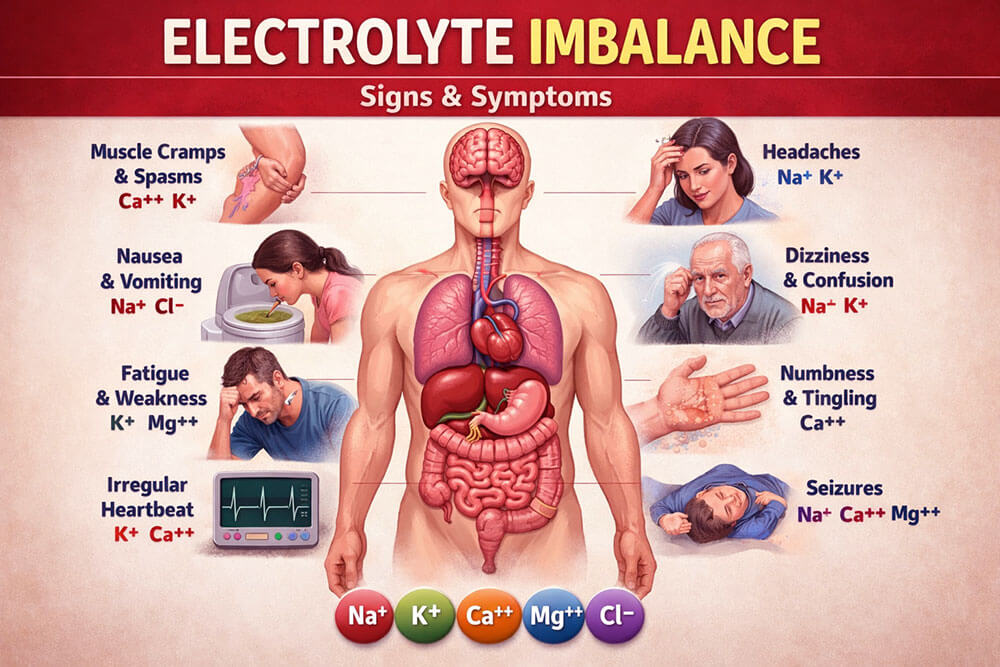
Symptoms of Electrolyte Imbalance
Symptoms may vary depending on the severity and type of imbalance and can include fatigue, muscle cramps, weakness, irregular heartbeat, nausea, dizziness, confusion, low blood pressure, or seizures.
Our Treatment Approach
- Comprehensive blood tests and electrolyte evaluation
- Assessment of kidney function and underlying medical conditions
- Oral or intravenous electrolyte replacement as required
- Customized IV fluid therapy for safe correction
- Continuous monitoring to avoid rapid correction complications
When Is Treatment Required?
Electrolyte imbalance treatment is commonly required in cases of severe dehydration, kidney disorders, uncontrolled diabetes, prolonged vomiting or diarrhea, post-surgical recovery, and in elderly or critically ill patients.
Timely treatment of electrolyte imbalance is essential to prevent complications and restore overall health. Contact us today for expert evaluation and personalized care.